HOUSTON (AP) — The Artemis II astronauts are now forever intertwined with Apollo 8.
A day after the historic lunar flyaround, NASA on Tuesday released striking new photos taken by the U.S.-Canadian crew.
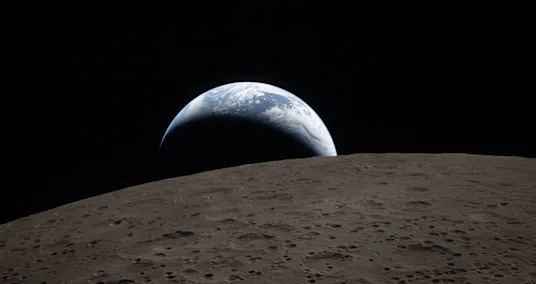
The four astronauts channeled Apollo 8’s famous Earthrise shot from 1968 with their own: Earthset, showing our planet setting behind the gray, pockmarked moon. Another photo captures the total solar eclipse that occurred when the moon blocked the sun from the crew’s perspective.
The three Americans and one Canadian are now headed home, with a splashdown in the Pacific set for Friday. In the meantime, scientists at Houston's Mission Control are poring over the stream of moon photos beaming down.
Apollo 8's three astronauts became the world's first lunar visitors, orbiting the moon on Christmas Eve 1968. Their Earthrise shot became a symbol of the modern-day environmental movement.
Artemis II marks NASA's first return to the moon with astronauts — a critical step toward a lunar landing by another crew in two years.
___
The Associated Press Health and Science Department receives support from the Howard Hughes Medical Institute’s Department of Science Education and the Robert Wood Johnson Foundation. The AP is solely responsible for all content.
LATEST POSTS
- 1
 The 10 Most Significant Virtual Entertainment Missions
 - 27 Countries Where You Can Buy a Home for Under $100,000
- 3Hundreds of Intact Dinosaur Eggs Emerge From 72-Million-Year Time Capsule
- 4When does Spotify Wrapped come out? The music streamer says 'soon.'
- 5From Specialist to Proficient Picture taker: Individual Triumphs





- Nikki Glaser returns as host of the 2026 Golden Globes: Everything the comedian has said about the upcoming awards show
- Instructions to Expand Your Smash 1500's Presentation: Tips and Deceives
- Vote in favor of your #1 sort of juice
- Promising Speculation Bearings for Portfolio Development in 2024
- Here are 10 stores where you can get a free Thanksgiving turkey
- Artemis II astronauts race to set a new distance record from Earth and behold the moon's far side
- Iran-backed Iraqi militias attack Kurdistan over 450 times since beginning of war
- Zelensky names spy chief to head presidential office after corruption row
- Can humans have babies in space? It may be harder than expected